Siem Reap is home to some of Cambodia‘s most extraordinary historic and cultural landmarks. While the temples of Angkor Archaeological Park rightfully get most of the attention, there are a range of attractions in Siem Reap that can round out your itinerary for a truly unforgettable experience. Travelers can learn more about Cambodia history in local museums, discover traditional craftsmanship, watch contemporary Cambodian performers take to the stage, and more. Whether you are planning your trip around the temples or hoping to see several different sides of the city, these are some of the top places to visit in Siem Reap and the surrounding region.

Angkor Wat Temple
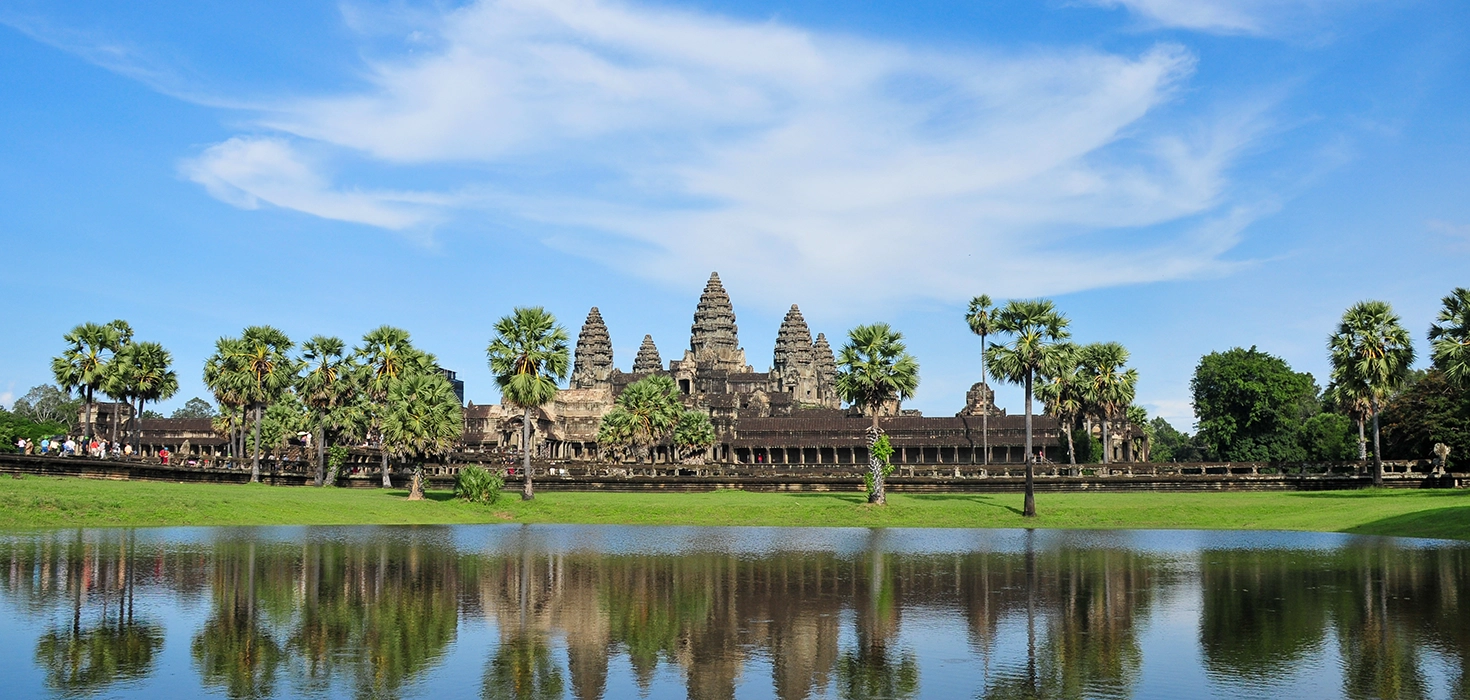
No list of attractions in Siem Reap could begin anywhere but at Angkor Wat. It is the centerpiece of the vast Angkor Archaeological Park and easily the most recognizable landmark in Cambodia. In fact, its five distinctive towers are featured on the country’s flag. Built in the 12th century during the reign of Suryavarman II, the temple is considered the world’s largest religious monument. Long galleries are lined with intricate bas-reliefs depicting religious stories, royal processions, battles, and scenes of everyday life. Visitors can cross the broad moat, explore courtyards and galleries, and climb toward the elevated central sanctuary.
Sunrise is one of the most popular times to visit Angkor Wat, when the towers reflect beautifully in the pools in front of the temple. Staying a little longer after most tourists have left for breakfast will allow you to explore the rest of the temple at your own pace.
Small Circle and Grand Circle Angkor Temple Tours
Angkor Wat is only one part of an enormous archeological landscape. One of the easiest ways to explore more of it is to follow the traditional Small Circle and Grand Circle temple routes. Completing both circuits, if you have the time, will provide a much fuller picture of Angkor and the history of the Khmer Empire.
The Small Circle generally concentrates on the most famous Siem Reap attractions, including Angkor Wat, the ancient walled city of Angkor Thom, Bayon, and Ta Prohm. It works particularly well for a first temple day because the distances between stops are manageable while the monuments themselves are remarkably varied. The Grand Circle reaches farther into Angkor Archaeological Park and typically includes sites such as Preah Khan, Neak Pean, Ta Som, Eastern Mebon, and Pre Rup.
Ta Prohm Temple
Ta Prohm provides one of the most striking experiences at Angkor, with parts of the temple engulfed by enormous tree roots that wrap around walls, doorways, and towers. Built during the reign of Jayavarman VII, Ta Prohm is one of the major Khmer architectural monuments within the Angkor World Heritage Site. It is also one of Angkor’s most photographed temples, so arriving earlier in the day can make it easier to appreciate and fully take the site in. Look beyond the famous root-covered walls and you will find carved lintels, devotional imagery, galleries, and traces of the much larger religious complex it once was.
Bayon Temple
At the center of Angkor Thom, Bayon is best known for the enormous, serene faces carved into its stone towers. As you move through the temple, the faces appear from different angles above galleries, stairways, and courtyards. The lower galleries are just as worth exploring. Detailed bas-reliefs depict battles, royal processions, markets, cooking, fishing, and other scenes of daily life, offering a fascinating glimpse into the people and events of the Angkorian period. Together, the monumental faces and richly detailed carvings make Bayon one of the most distinctive temples to explore in Angkor Thom.
Banteay Srei, Phnom Kulen and Kbal Spean
Travelers willing to venture farther from central Angkor can turn a day into a broader exploration of temples, mountains, and sacred landscapes. Banteay Srei is a highly recommended stop famous for the exceptional detail of its carvings. The 10th-century temple was built primarily from red sandstone, which allowed craftspeople to create remarkably elaborate decorative work that remains visible today. Its smaller scale makes the intricacy of the doorways, pediments, and reliefs particularly striking.
Farther north, Phnom Kulen is a sacred mountain closely connected to the beginnings of the Khmer Empire. Today, the area combines cultural and natural attractions, including religious sites and waterfalls. Kbal Spean adds another stop that combines nature and history. The site is known for carvings created directly in and around the riverbed.
Pub Street
If you want to experience Siem Reap nightlife after a day spent exploring the city’s temples, then Pub Street is the place to go. This popular street and the surrounding blocks form the city’s busiest nightlife district, with restaurants, bars, street food, music, shops, and late-night activity packed into a relatively compact area. The neighborhood is particularly lively after dark, when illuminated signs and outdoor tables fill the streets. It is an easy place to grab dinner, try Cambodian dishes, stop for a drink, or simply wander through the surrounding night markets. Pub Street also puts you close to the central riverside area, making it easy to combine several things to do in Siem Reap in the evening.
Kampong Phluk Floating Village
To explore a different side of Siem Reap Province, head toward Tonlé Sap Lake and Kampong Phluk. The community consists of clusters of highly elevated stilt houses built within the lake’s floodplain southeast of Siem Reap. A boat trip takes visitors along the waterways past homes, schools, boats, and other parts of daily village life. The experience also changes considerably with the seasons. In the drier months, even more of the towering stilts beneath the houses become visible. During the rainy season, water levels rise and boats can also explore areas of the flooded forest.
Phare, The Cambodian Circus
One of the most exciting nighttime Siem Reap activities takes place beneath a big top rather than among ancient ruins. Phare, The Cambodian Circus blends acrobatics with theater, live music, dance, and drama. Individual productions tell Cambodian stories inspired by subjects ranging from folklore and history to contemporary life, giving the performances a strong cultural identity rather than presenting a conventional circus show.
For more of a modern culture tour in Siem Reap, Phare offers a particularly memorable way to experience contemporary Cambodian creativity. It is located about a 10-minute tuk tuk ride from Pub Street, making it easy to continue a night out after the evening performance.
Angkor National Museum
The galleries of Angkor National Museum provide historical and religious context for the monuments, art, rulers, and beliefs of the Khmer Empire. One of its signature spaces is the Gallery of 1,000 Buddha Images, while other galleries focus on the origins and development of the Khmer Empire. The museum is a great stop to pair with Siem Reap’s temples. Visiting before can help you recognize some of the figures, symbols, and architectural ideas you encounter at the temples. Visiting afterward gives you a chance to place what you have already seen into a wider historical framework. Either way, it is one of the most useful attractions in Siem Reap for travelers who want to understand the stories behind the ruins rather than simply admire them.
Artisans Angkor
Traditional Khmer craftsmanship is still very much alive in Cambodia today, and Artisans Angkor provides an opportunity to see some of those skills up close. Here, visitors can watch artisans produce silk, stone, wood, and lacquer products using traditional Cambodian craftsmanship and decorative arts. A visit offers an interesting bridge between the craftsmanship seen throughout Angkor’s monuments and its continuation in contemporary Cambodia. Artisans Angkor is an especially easy cultural stop to incorporate into a day in central Siem Reap and a good choice for anyone who wants locally made gifts or souvenirs connected to Cambodian artistic traditions.
Wat Bo Pagoda
Siem Reap’s religious heritage isn’t limited to Angkor or the Angkorian period. Wat Bo is one of Siem Reap’s oldest Buddhist pagodas and is especially known for the murals inside its main temple building. The paintings depict scenes from the life of the Buddha and other religious stories, adding an important artistic element to the pagoda’s historic character.
Its central location makes Wat Bo easy to work into an afternoon spent exploring the riverside and nearby neighborhoods, particularly if you want a slower-paced stop between larger attractions in Siem Reap. Keep in mind that it is an active religious site rather than an archeological one, so it is expected that visitors dress and act respectfully when inside.
APOPO Visitor Center
The APOPO Visitor Center offers a close look at Cambodia’s ongoing humanitarian demining efforts and the specially trained rats that help make that work possible. Visitors can learn about the country’s landmine problem and see how African giant pouched rats, known as HeroRATs, are trained to detect the scent of explosives. A typical visit includes an exhibition, a live HeroRAT demonstration, and an opportunity to learn more about the training and detection process. The experience is both educational and memorable, while also highlighting an important part of modern Cambodia history.
Bakong My Village
Located about a 15-minute drive from central Siem Reap, Bakong My Village provides a more relaxed countryside experience. The destination is set amid landscaped natural surroundings and provides food, drinks, accommodation, and local activities. Plus, it is only a short walk from Bakong Temple, an impressive ancient temple known for its tiered pyramid design and peaceful setting.
Bakong My Village was developed as a community-based tourism initiative with connections to the surrounding village. The setting makes it easy to slow down among greenery, ponds, rural scenery, and traditional-style spaces after a morning of sightseeing. It is a great option for travelers who want their culture tour in Siem Reap to include some time away from the busiest parts of the city and Angkor.
Angkor Wildlife & Aquarium
Families and wildlife enthusiasts looking for more modern Siem Reap attractions should definitely add a stop at Angkor Wildlife & Aquarium. The extensive facility combines aquarium exhibits with a wider wildlife park, reptile house, aviary, discovery touch pool, and other animal-focused areas. Its aquatic displays introduce visitors to species and ecosystems associated with Cambodia’s rivers and marine environments, while its conservation work includes native and endangered species.
The freshwater displays at Angkor Wildlife & Aquarium might be particularly relevant to those on a trip through Cambodia, where the Mekong and Tonlé Sap support extraordinarily rich aquatic ecosystems and play a central role in daily life. Angkor Wildlife & Aquarium can be a welcome change of pace for families traveling with children or anyone interested in adding nature and conservation to their list of things to do in Siem Reap.
Wake Park Cambodia
Part of what makes Siem Reap such a great place to visit is the variety of attractions. After several days of temples and museums, you may be ready for something a little different. Wake Park Cambodia provides exactly that. It is a perfect destination for families and active travelers.
The park operates a full-size cable wakeboarding system designed for everyone, from complete beginners to experienced riders. Instructors are available to help first-timers learn the basics, while obstacles around the course give more experienced wakeboarders opportunities to practice tricks. Wake Park Cambodia also provides on-site bungalow accommodation, making it possible to visit for a few hours or turn the experience into an overnight stay. It may be one of the less expected attractions in Siem Reap, and that is exactly what makes it worth considering.