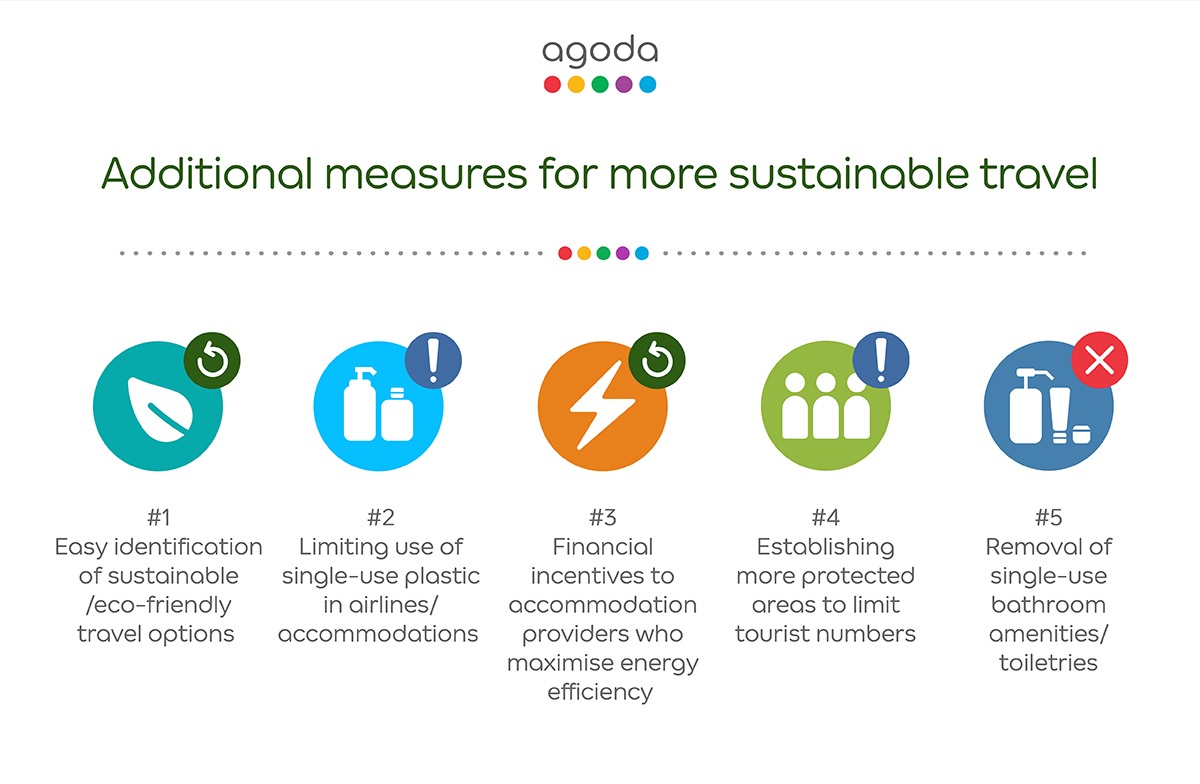
Easy identification of sustainable eco-friendly travel options, limited use of single-use plastics and financial incentives for accommodation providers who maximize energy efficiencies are the top three additional measures needed to make travel more sustainable, according to Agoda’s Sustainable Travel Trends Survey. Establishing more protected areas to limit tourist numbers and removal of single-use bathroom amenities round out the top five global measures.
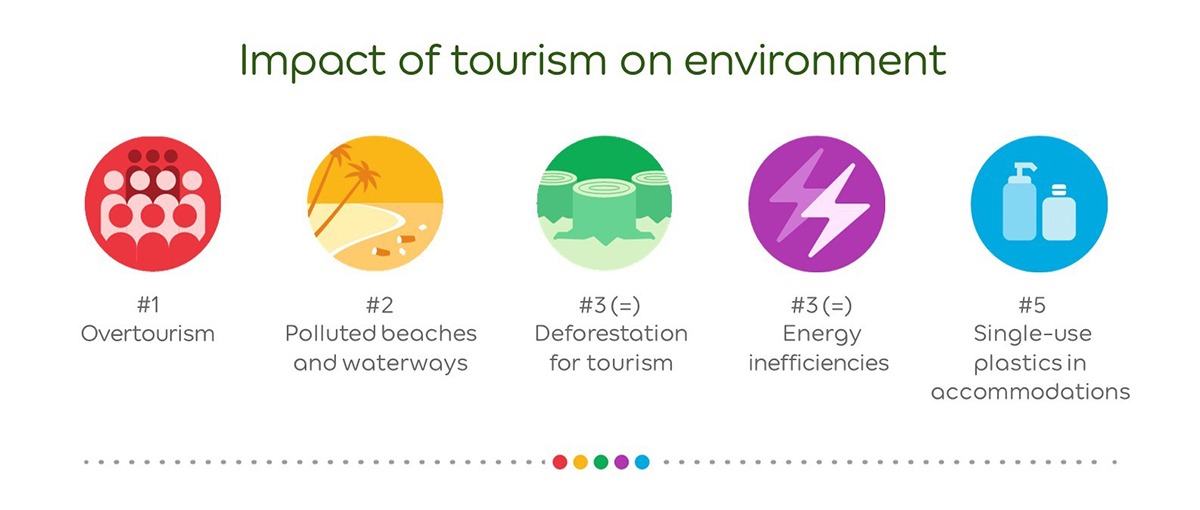
The findings from the survey, launched in June to mark World Environment Day, also revealed globally that overtourism and pollution of beaches and waterways are the top two concerns of the impact of tourism, with deforestation and energy inefficiencies (including overconsumption of electricity/water) ranking third jointly. Governments are considered most responsible for making changes to make travel more sustainable.
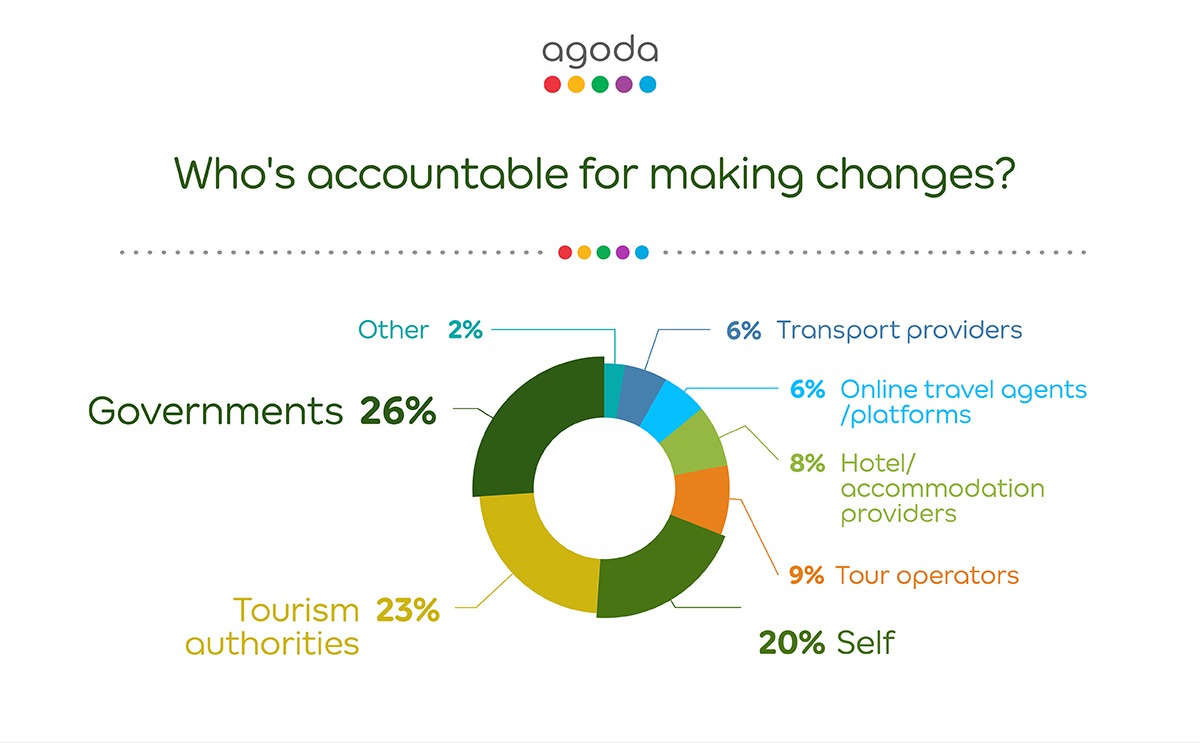
Globally, the public considers governments most accountable for making positive environmental changes around travel, followed by tourism authorities and individuals themselves. When it came to holding governments most accountable, those in Indonesia and UK were most likely to do so (36%); China followed not too far behind at 33%, with Australia and Malaysia in the fourth and fifth spots (28% and 27%, respectively.) The markets most likely to cite themselves or individuals as most responsible for making changes to traveling sustainably were Thailand (30%), Japan (29%) and the US (28%). Meanwhile, China (11%), the UK (13%) and Vietnam (14%) were least likely to attribute responsibility to the individual.
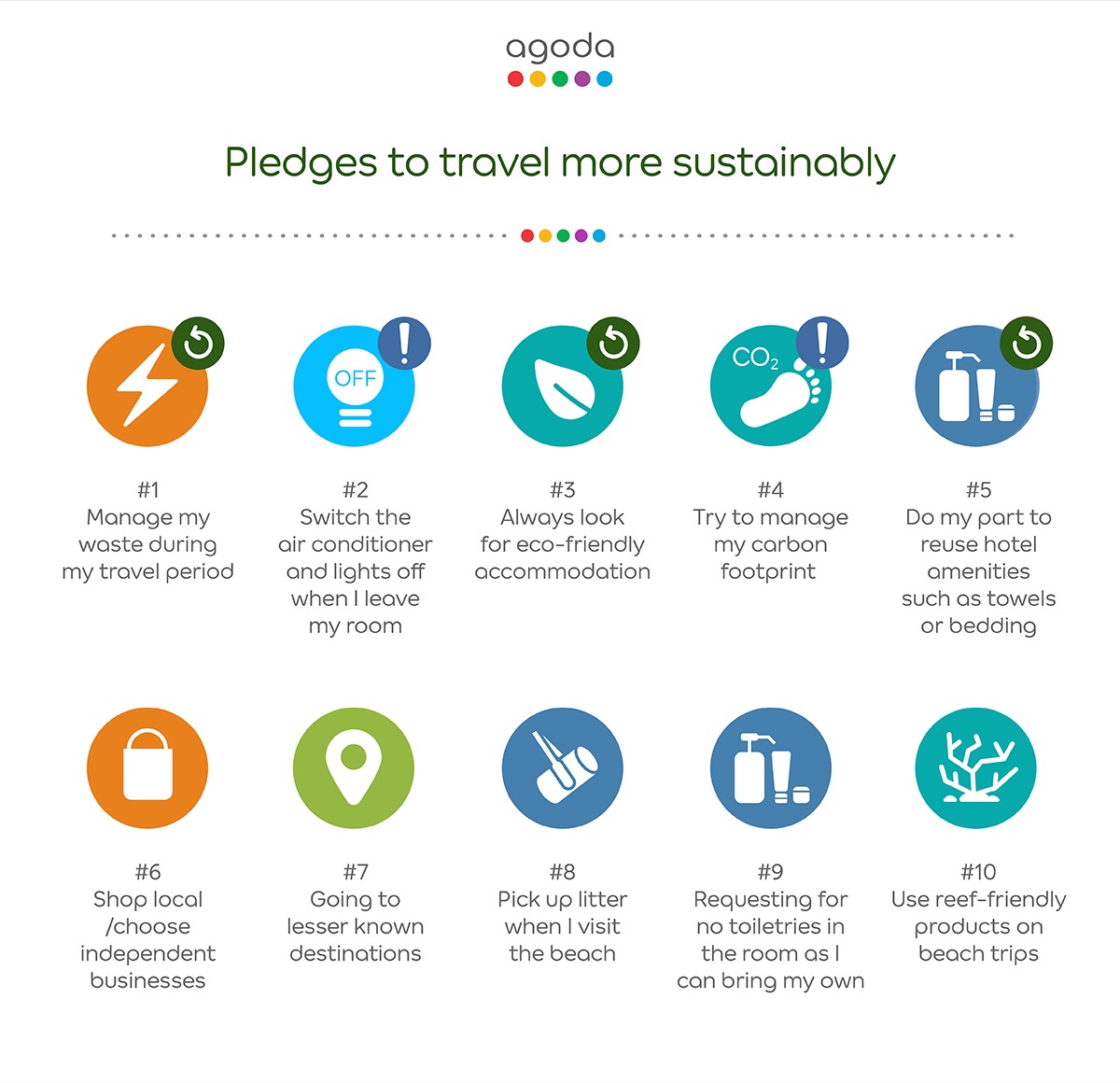
When asked what they would pledge to do better in a post-COVID-19 travel scenario, the top responses globally were as follows: 1. manage their waste, including using less single-use plastics, 2. switch off the air conditioning and lights when leaving their accommodations, and 3. always look for eco-friendly accommodations. Despite overtourism being the biggest concern for the public, going to lesser-known destinations ranked seventh (out of 10) as a pledge to do better. In other words, there is no “one size fits all” for sustainability.
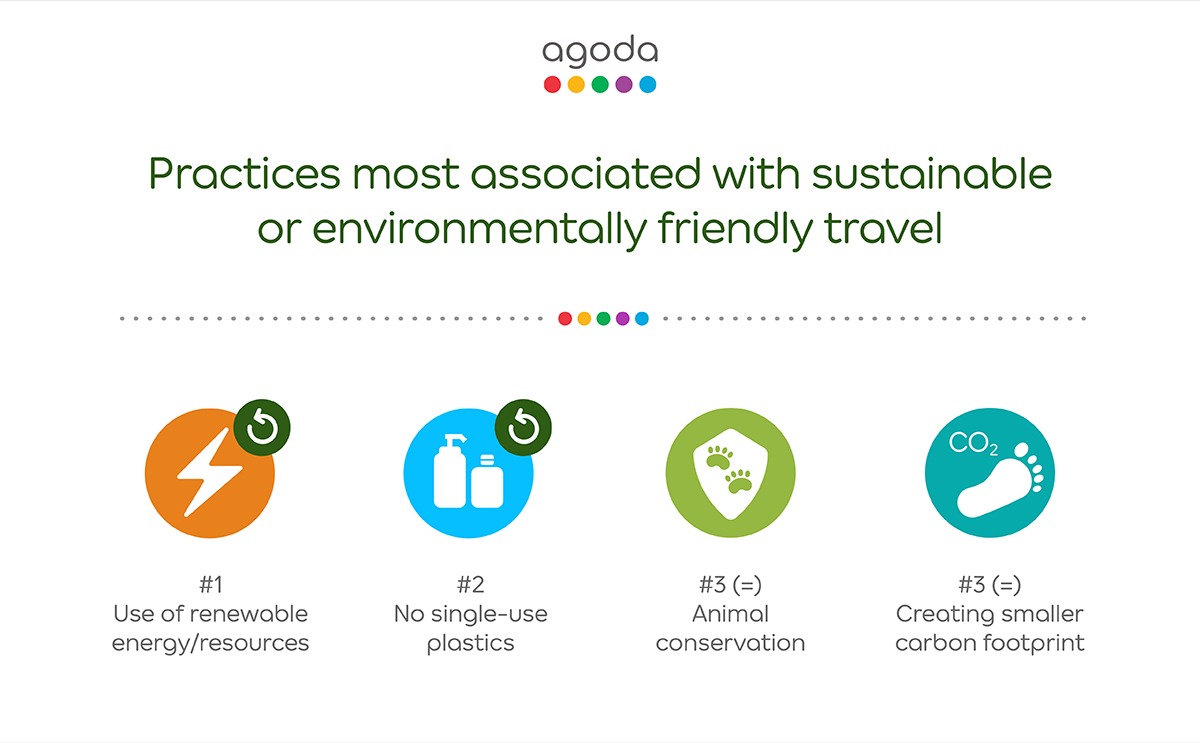
The top practices most associated with environmentally friendly or sustainable travel are as follows: 1. renewable energy and resources like solar, wind, hydroelectric and water. 2. no single-use plastics. 3. (tie) animal conservation and creating a smaller carbon footprint.
Other energy-saving solutions, such as key cards, motion sensors and using natural cleaning products, account for other key practices. Buying locally sourced products, reusing bedding or towels during holiday stays and visiting off-the-beaten track destinations are the bottom three practices (out of 10) associated with sustainable travel.
“We can see from the Agoda Sustainable Travel Trends Survey that the messages of taking simple steps such as switching off lights and air conditioning when leaving the room or reducing waste by minimizing use of single-use plastics are being embraced by the public across the globe,” explained Agoda CEO John Brown. “What is also clear is that while globally the message is (that) governments need to take the lead on managing sustainable travel, there is recognition that some responsibility lies with people’s own behavior.
“While there are different interpretations of what practices are eco-friendly or sustainable, most of the public is keen to be able to do their part by actively pledging to choose eco-friendly properties or make smarter environmental choices when traveling. One of the easiest ways to counter concerns about overtourism is to consider traveling to off-the-beaten-track destinations. This past year at Agoda, we have seen a shift in travel patterns as people, limited to domestic travel, explore lesser-known areas. If managed well, not only does this help support independent hoteliers and accommodation providers that rely economically on the tourist dollar, it can help lessen the environmental burden on overcrowded areas.
“As an industry, we need to continue to find ways to help individuals achieve these goals, be it making it easier to search and find sustainable properties on Agoda or supporting and encouraging more partners to use key cards for power, use renewable energy sources or offer carbon-offsetting options for travel products.”
COVID-19 negatively impacts attitudes to sustainable travel
The increase in desire to travel more sustainably was most prevalent among respondents from South Korea, India and Taiwan, 35%, 31% and 31%, respectively. However, looking at the figures globally, while 25% of the respondents show an increased desire to travel more sustainably, the desire to travel more sustainably decreased for 35%. The markets reporting the biggest proportional decreases were Indonesia (56%), Thailand (51%) and the Philippines (50%).
“It’s concerning that many people see sustainable travel as less important today than they did before COVID-19, but I hope that is just a short-term effect, driven by people’s thirst to get back out there and travel any way they can,” Brown concluded.
Diving deep into the data
On additional measures:
- While making it compulsory for travelers to pay a sum for carbon offsetting was selected the least as a measure that could be implemented to make travel more sustainable, respondents in India were most likely to support this concept, followed by US and Taiwan markets. China is the market least likely to do so.
- Taiwan, Singapore, Thailand, China and Australia are the markets most likely to suggest financial incentives for accommodation providers who maximize energy efficiency.
- Japan is the market least likely to recommend more protected areas to limit tourist numbers, followed by South Korea and the US. Meanwhile, the Philippines, Indonesia and Malaysia markets are most likely to limit tourist numbers by recommending more protected areas.
- UK tops the list, but is followed closely by Australia, Indonesia, and the Philippines, as the market most likely to support limiting single-use plastics in airlines or accommodations. China, Taiwan, the US and Japan are least likely to suggest this measure./li>
- Malaysians, Filipinos and Indonesians are most favorable for easy identification of sustainable or eco-friendly travel options, such as flagging with an environmental tag on a digital travel platform. While still their number one-measure overall, US and Japan are the bottom two markets for such identification.
- Removal of single-use bathroom amenities is most favored by Taiwan, Japan and UK.
On responsibility for change to make travel more sustainable:
- All generations, except for the Silent Gen (those born before 1946), selected governments as the top response for who is most responsible for making travel more sustainable. The Silent Gen contained the largest proportion of those who consider individuals most responsible.
- Men are marginally more likely to cite governments as most responsible (28%), followed by tourism authorities (21%) and themselves (20%). An equal portion of women hold government and tourism authorities as most responsible (25%), followed by themselves, (19%).
Global top 10 pledges to travel more sustainably
- Manage my waste during my travel period (e.g., use less single-use plastics)
- Switch the air-conditioner and lights off when I leave my room
- Always look for eco-friendly accommodation
- Try to manage my carbon footprint (e.g., taking most journeys by bus, train or boat, or paying for a carbon offset)
- Do my part to reuse hotel amenities such as towels or bedding
- Shop local/choose independent businesses
- Going to lesser-known destinations
- Pick up litter when I visit the beach
- Requesting for no toiletries in the room as I can bring my own
- Use reef-friendly products on beach trips
On pledges for more sustainable travel
- Philippines, Malaysia and India are most likely of all markets to pledge to look for eco-friendly accommodation.
- Singapore, UK and Australia are the markets most likely to pledge to reuse hotel amenities such as towels and bedding, compared to Indonesia, Philippines, China, and Thailand, which are the least likely to reuse hotel amenities.
- Indonesia, Philippines and Malaysia most likely to pledge to go to lesser-known destinations to travel more sustainably, with Japan, UK and Taiwan least likely to do so.
- While managing waste, including using less single-use plastics, is a top three pledge for all markets, South Korea, Thailand, and Philippines are the markets most likely to pledge this.
- Despite pollution of waterways being cited as the number-two concern for the impact of travel, picking up litter off beaches ranks only 8 out of 10 in pledges to travel more sustainably, with only 18% pledging to do so.
- Vietnam, Thailand, Indonesia, Philippines, and China are top markets to pledge to pick up litter when visiting the beach. Respondents in Singapore, Taiwan and Japan are least likely to help clean up littered beaches.
- Shopping local is at number 6 in the pledges, with Australia (35%), UK (31%) and US (28%) most likely to pledge this, and Japan (5%), China (9%) and Taiwan (11%) least likely to shop local.
- A higher percentage of women compared to men men (44% versus 40%) pledge to manage waste and switch off aircon/lights (44% versus 36%).
- The bottom five pledges globally (from last to first) include using reef-friendly products on beach trips (14%), requesting no toiletries as I can bring my own (17%), picking up litter when visiting the beach (18%), going to lesser-known destinations (19%), and shopping local (21%).
- While both women’s and men’s top three pledges are the same, fourth on the women’s list is a pledge to reuse hotel amenities versus men who pledge bigger actions, such as trying to manage the carbon footprints.
- Singaporeans are more likely to pledge to switch off aircon and lights when they leave the room and reuse amenities, compared to other markets.
- Philippines (49%), Malaysia (43%) and India (42%) are most likely to always look for eco-friendly accommodations when they travel post-COVID-19.
- Conversely, public respondents in the UK (14%), China (17%), US (17%), Japan (18%) and South Korea (18%) are least likely to look for eco-friendly accommodation.
Sustainable travel pledges by country
Australia
- Australians are most concerned about overtourism, followed by polluted beaches and waterways and energy waste/inefficiencies.
- 28% of Australians believe Governments are most responsible for making changes within the sustainable travel space, followed by tourism authorities at 19%, and themselves at 18%.
- Australians pledge to switch off air conditioners and lights when they leave their rooms, manage waste by reducing use of single-use plastics, shop at local independent businesses and re-use hotel amenities such as towels and bedding.
- Practices that are considered most helpful to travel sustainably by Australians are accommodations using renewable energy, key cards to power electricity in hotels/accommodations and destinations that are not high-density tourist spots.
- When asked what practices Australians associate with sustainable travel they selected first the use of renewable resources, second no single-use plastics, and third was a tie for a smaller carbon footprint and buying local when traveling.
- Additional measures that help make travel more sustainable, according to Australians, are limiting single-use plastics in airlines/accommodations, easy identification of eco-friendly travel options and financial incentives to accommodation providers who maximize energy efficiency.
China
- Overtourism was the biggest concern for Chinese participants, followed by polluted beaches and deforestation.
- 33% of Chinese respondents selected governments most responsible when it came to making changes around tourism, followed by tourism authorities at 22%, and 11% believe they themselves are responsible for making changes within the sustainable travel space.
- More Chinese people would pledge to bring their own toiletries, manage waste and switch off the air conditioning and lights when they leave their room when traveling.
- Practices that are most helpful to travel sustainably are accommodations using renewable energy/water, followed by no single-use plastics within the accommodation, and destinations that are not high-density tourist spots.
- When asked what the Chinese public associates most with sustainability, 47% chose use of renewable resources, followed by 35% who chose creating a smaller carbon footprint and 33% who chose no single-use plastics.
- Additional measures suggested were easy identification of eco-friendly travel options, which ranked number-one at 57%, followed by financial incentives at 51%, with establishing more protected areas to limit tourist numbers at 40%.
India
- Indians are most concerned about polluted beaches and waterways and overtourism equally, followed by the use of single-use plastics and energy inefficiencies.
- 24% of Indians believe governments are most responsible when it comes to making changes to help people travel more sustainability, followed by 22% who cite tourism authorities and 20% who said themselves.
- More Indians pledge to choose eco-friendly accommodations, manage waste by using less single-use plastics, and switch off air conditioner and lights when they leave their rooms when traveling in the future.
- Practices that are considered most helpful to travel sustainably by Indians are accommodations using renewable energy, no single-use plastic in the accommodation and traveling to destinations that are not high-density tourist spots.
- When asked what practices Indians associate with sustainability, 36% cite renewable resources, with 32% choosing natural cleaning products and 31% preferring eco-friendly building design/furniture.
- The additional measures to help make travel more sustainable according to Indians are easy identification of eco-friendly travel options, followed by limiting the use of single-use plastics in airlines and accommodations and financial incentives to accommodations providers who maximize energy efficiencies.
Indonesia
- Indonesians are most concerned about overtourism, followed by polluted beaches and waterways, then the use of single-use plastics in destination accommodations.
- Indonesia has the highest proportion among all markets (on par with UK) to believe that the government is most responsible for changes around tourism, with 36% indicating so. This is followed by 31% choosing tourism authorities and 17% saying they themselves are responsible.
- Manage waste, including use of single-use plastics, always looking for eco-friendly accommodation and switching off air conditioners and lights when leaving their room are the top three pledges for Indonesians when they travel post-COVID-19.
- No single-use plastics in an accommodation, accommodations using renewable energy or water sources, and destinations that are not high-density tourist spots are the top three most helpful things for Indonesians to travel more sustainably.
- What practices do they associate with “sustainable travel”? 41% say animal conservation, which is tied with renewable resources for the top spot. In the third spot, 39% associate sustainable travel with no single-use plastics.
- Other measures suggested were easy identification of eco-friendly travel options, followed by limiting the use of single-use plastics in accommodations and airlines and establishing more protected areas to limit tourist numbers.
Japan
- Japanese are most concerned about overtourism first, followed by polluted beaches and waterways and deforestation.
- Japanese hold themselves accountable (29%), followed by 22% who believe governments and 15% tour operators as most responsible, to making changes toward more sustainable travel.
- Practices that are considered most helpful by Japanese are the use of renewable resources, no single-use plastics in accommodations and making a smaller carbon footprint.
- When asked what practices Japanese associate with sustainability, 35% suggest use of renewable energy and resources, while 33% said no single-use plastics and 32% a smaller carbon footprint.
- The additional measures Japanese public cite will help make travel more sustainable are easy identification of eco-friendly travel options, followed by limiting single-use plastics in airlines and accommodations and removal of single-use bathroom amenities and toiletries.
Malaysia
- More Malaysians are most concerned about overtourism, followed by polluted beaches and waterways, then deforestation.
- Malaysians believe governments are most responsible when it comes to making changes to make travel more sustainable (27%), followed by tourism authorities at 25% and themselves at 16%.
- Malaysians pledge to always look for eco-friendly accommodations, manage their waste during their travel periods and switch off air conditioners and lights when leaving their rooms when they travel post-COVID-19.
- Practices that are considered most helpful to travel sustainably by Malaysians are accommodations using the following: 1. renewable energy, 2. key cards to power electricity in hotels and 3. destinations that are not high-density tourist spots.
- When asked what practices Malaysians associate with sustainability, 40% considered use of renewable energy/resources, followed energy-saving practices, such as motion-sensor lights and key cards for electricity (36%), and in the third spot jointly were eco-friendly building design/furnishings and animal conservation, both at 29%.
- The additional measures to help make travel more sustainable, according to Malaysians, are easy identification of eco-friendly travel options, limiting single use plastics and providing financial incentives to accommodation providers that maximize energy efficiency.
Philippines
- More Filipinos are most concerned about polluted beaches and waterways (26%), followed by overtourism (24%), and with 14% each, the use of single-use plastics in destination accommodations and deforestation.
- 35% of Filipinos believe tourism authorities are responsible for making sustainability changes; coming in second was the government at 19%, while 18% of Filipinos hold themselves accountable for traveling more sustainably.
- Always looking for eco-friendly accommodations and managing their waste, such as by using less single-use plastics, are joint top pledges for the public in the Philippines (49%), followed by 26% who will shop local and 25% pledging to switch off air conditioners and lights when they leave the room when they travel in the future.
- Practices that are considered helpful to travel sustainably by Filipinos are accommodations that use renewable resources 27%), destinations that are not high-density tourist spots (18%) and no single-use plastics in accommodations.
- When asked what practices Filipinos associated with sustainability, most associated renewable energies, such as solar and wind, or water waste management (43%), followed by eco-friendly building design or furnishings (39%) and buying local products from local sellers (36%).
- The additional measures to help make travel more sustainable, according to Filipinos, are easy identification of eco-friendly travel options, limiting use of single-use plastics in airlines/accommodations and establishing more protected areas to limit tourist numbers.
Singapore
- More Singaporeans are most concerned about overtourism , followed by energy waste and polluted beaches and waterways.
- 29% of Singaporeans think tourism authorities are most responsible to make change within sustainability, followed by 24% government and themselves.
- More Singaporeans pledge to switch off air conditioners and lights when leaving their rooms, manage their waste and re-use hotel amenities like towels and bedding.
- Practices that are considered most helpful to travel sustainably by Singaporeans are using key cards to power electricity in an accommodation, accommodations using renewable energy and reusable amenities.
- When asked what practices Singaporeans associate with sustainability, they said renewable energy, energy saving practices and eco-friendly building design and furnishings.
- The additional measures to help make travel more sustainable according to Singaporeans are easy identification of eco-friendly travel options, limiting single-use plastics in airlines/accommodations and financial incentives to accommodation providers that maximize energy efficiency.
South Korea
- Deforestation is the topmost concern regarding the impact of travel for South Koreans (23%), with both polluted beaches and waterways and use of single-use plastics in accommodations as second most important.
- South Koreans believe tourism authorities are most responsible for making changes to make travel more sustainable (27%), followed by governments and themselves at 21%.
- Managing waste such as using less single-use plastics, as well as switching off air conditioners and lights when leaving the room, are the top pledges for South Koreans when they travel again following COVID-19 (53%). This is followed by trying to manage their carbon footprints by taking most journeys by bus, train or boat, or paying for a carbon offset.
- No single-use plastics in accommodations, reusable amenities such as shower gels or glass water bottles, and accommodations using renewable energy sources are the top three things South Koreans find most helpful to travel more sustainably.
- What do they associate with “sustainable travel”? Koreans cite no single-use plastics at 54%, use of renewable resources at 39% and energy saving practices at 38%.
- The additional measures to help make travel more sustainable, according to South Koreans, are as follows: 1. easy identification of eco-friendly travel options, 2. limiting use of single-use plastics in airlines or accommodations and 3. financial incentives to accommodation providers that maximize energy efficiency.
Taiwan
- More Taiwanese are most concerned about overtourism (29%), followed by energy waste (19%), and polluted beaches and waterways (16%).
- Taiwanese feel governments and tour operators are most responsible at 24%, followed by tourism authorities and themselves at 17% each.
- Taiwanese pledge to switch off air conditioners and lights when leaving their rooms, opt to supply own toiletries and try to manage waste when they travel post-COVID-19.
- Practices that are considered most helpful to travel sustainably by Taiwanese are accommodations using renewable resources, no single-use plastics and key cards to power electricity in an accommodation.
- When asked what practices Taiwanese associate with sustainability, 47% considered the use of renewable resources, 43% no single-use plastics and 40% creating a smaller carbon footprint.
- The additional measures to help make travel more sustainable, according to Taiwanese, are easy identification of eco-friendly travel options (62%), financial incentives to accommodation providers that maximize energy efficiency (55%) and removal of single-use bathroom amenities/toiletries (46%).
Thailand
- More Thais are most concerned the impact tourism plays on overtourism, deforestation for tourism, and energy waste or inefficiency.
- 30% of Thais believe they themselves are most responsible, followed by tourism authorities (25%) and then governments (24%), for making changes within the sustainable travel space.
- Thais pledge to manage their own waste by using less single-use plastics (53%), during travel periods, to always look for eco-friendly accommodation (37%) and switch the air conditioners and lights off when leaving rooms (31%) when they travel in the post-COVID-19 period.
- Practices that are considered most helpful to travel sustainably by Thais are accommodations using renewable energy or water sources (31%), reusable amenities (20%) and key cards to power electricity in an accommodation (15%).
- When asked what practices associate with sustainability, 47% considered use of renewable resources, 41% animal conservation and 35% use of natural cleaning products.
- The additional measures to help make travel more sustainable are easy identification of sustainable/eco-friendly travel options, financial incentives to accommodation providers that maximize energy efficiency, and limiting use of single-use plastics in airlines or accommodations.
UK
- In line with the global trend, overtourism is the top concern about impacts of tourism for Brits(25%), followed by polluted beaches and waterways (23%) and then deforestation (18%).
- More British hold governments most accountable for making changes to tourism to make traveling more sustainable at 36%, followed by transport providers at 16% and tourism authorities (15%).
- The UK’s top pledges to travel more sustainably after COVID-19 are to switch off air conditioners and lights when they leave their rooms, followed by reusing hotel amenities such as towels and bedding and managing waste by using less single-use plastics during their travel times.
- What practices do British associate with “sustainable travel”? The top three are creating a smaller carbon footprint at 51%, use of renewable resources at 50% and no single-use plastics at 33%.
- When asked what would help people travel more sustainably? The top three things are accommodations using renewable energy (29%), followed by no single-use plastics in accommodations (15%). Reusable amenities and use of key cards to power off electricity in accommodations and destinations that are not high-destiny tourist spots all were third (12%).
- Top three additional measures to help make travel more sustainable, according to the Brits, are limiting the use of single-use plastics in airlines or accommodations, easy identification of eco-friendly travel options, and financial incentives to accommodation providers that maximize energy efficiency.
United States
- More Americans are most concerned about polluted beaches, followed by overtoursim and energy inefficiencies.
- Americans take complete accountability, with 28% claiming they themselves are responsible for making changes around tourism to make traveling more sustainable, followed by both tourism authorities and governments tying at 16%.
- The US’ top pledges to travel more sustainably post-COVID-19 are as follows: 1. switch off air conditioners and lights when leaving their hotel rooms, 2. reuse hotel amenities such as towels or bedding and 3. (tie) shopping local or at independent businesses and managing their waste.
- Practices that are considered most helpful to travel sustainably by Americans are accommodations using renewable energy or water sources, key cards to power electricity in an accommodation and destinations that are not high-density tourist spots.
- What do they associate with “sustainable travel”? Use of renewable energy at 36%, energy saving at 26%, no single-use plastics and buying local at 25% each.
- The additional measures to help make travel more sustainable, according to Americans, are easy identification of eco-friendly travel options, limiting use of single-use plastics in airlines/accommodations and financial incentives to accommodation providers that maximize energy efficiency.
Vietnam
- More Vietnamese are most concerned about overtourism (28%), followed by deforestation (24%) and use of single-use plastics in destination accommodations (16%).
- 26% of Vietnamese hold tourism authorities (26%) most responsible for making change within the sustainability space, followed by governments (19%) and then tour operators (16%).
- Vietnamese participants’ top three pledges for post-COVID-19 travel are to always look for eco-accommodations (36%) and to equally manage their waste and switch off air conditioners and lights (34%).
- Practices that are considered most helpful to travel sustainably by Vietnamese are accommodations that use renewable energy/water (24%), followed by destinations that are not high-density spots, renewable amenities and no single-use plastics in an accommodation, all at 16%.
- When asked what practices Vietnamese people associate with sustainable travel, participants said using natural cleaning products (40%), animal conservation (38%) and use of renewable resources (36%).
- The additional measures to help make travel more sustainable, according to Vietnamese respondents, are easy identification of eco-travel options at 59%, limiting single-use plastics in airlines/accommodations at 57% and financial incentives for accommodations that maximize energy efficiency at 40%.