In movies, dramas, and anime, shinobi, or ninjas, are depicted as shadowy heroes with superhuman physical abilities. Once very real figures in Japan, how did ninjas become ninjas? And what was their purpose? Mie Prefecture’s Iga region and Shiga Prefecture’s Koka region are considered the birthplace of these covert agents and are home to numerous historical sites and legends about them. Read on as we explore these scattered traces of the past in the Iga/Nabari area and solve the mysteries behind the ninjas, all part of a true shinobi experience.
Who Were the Ninjas? Insights from the Chief Priest of Aekuni Shrine
An ink-red torii gate, believed to ward off evil, marks the entrance to the shrine. The main hall sits at the top of the stairs and further beyond lies the inner sanctuary. Aekuni Shrine, founded in 658 AD, is the highest ranked shrine in the Iga area . It enshrines Prince Ohiko, deity of traffic safety and longevity and eldest son of Emperor Kogen, Japan’s eighth emperor, as the principal deity, along with Sukunabikona, the deity of medicine and sake brewing, and Kanayama-hime, the goddess of mining. In ancient times, the Hata clan, an immigrant tribe believed to be the ancestors of the famous Hattori ninja family, lived in Iga and worshiped Sukunabikona.
Blessed by Sukunabikona, the deity of medicine and sake brewing, the water from the longevity well (now sealed) and purification fountain in the shrine grounds is believed to cure all ailments. Every year on November 23, Aekuni Shrine hosts the Kurondo Matsuri, a late Heian-period festival originally meant to pray for the prosperity of the Hattori family. Although it was discontinued during the turbulent Sengoku period, it was revived in 1995 after a 450-year hiatus. Those involved in the rituals still wear traditional black garments.
Chief priest Tarodachi Manabu explains, “People known as ninjas were actually self-defense groups in Iga . Due to the poor land, they had to protect their scarce harvests from enemies, firmly uniting them as an exclusive group.” Aekuni Shrine served as a gathering place for groups such as these in Iga , providing them with spiritual support. Trusted for their discretion, the groups were eventually tasked with intelligence gathering by the shogunate, the military government of the time, and the skills and wisdom they developed for these missions came to be known as “ninjutsu.”
Tarodachi adds, “Ninjas were essentially the embodiment of the Iga spirit, dedicated to protecting their comrades and homeland and facing their duties with sincerity.” Surrounded by the spirit of the ninjas at Aekuni, visit today and embark on your very own shinobi experience.
Aekuni Shrine
Address: 877 Ichinomiya, Iga-shi, Mie-ken
Phone: 0595-23-3061
Office Hours: 8:30–16:00
Temple Opening Hours: 9:00–15:00
A True Ninja Experience at the Iga-ryu Ninja Museum
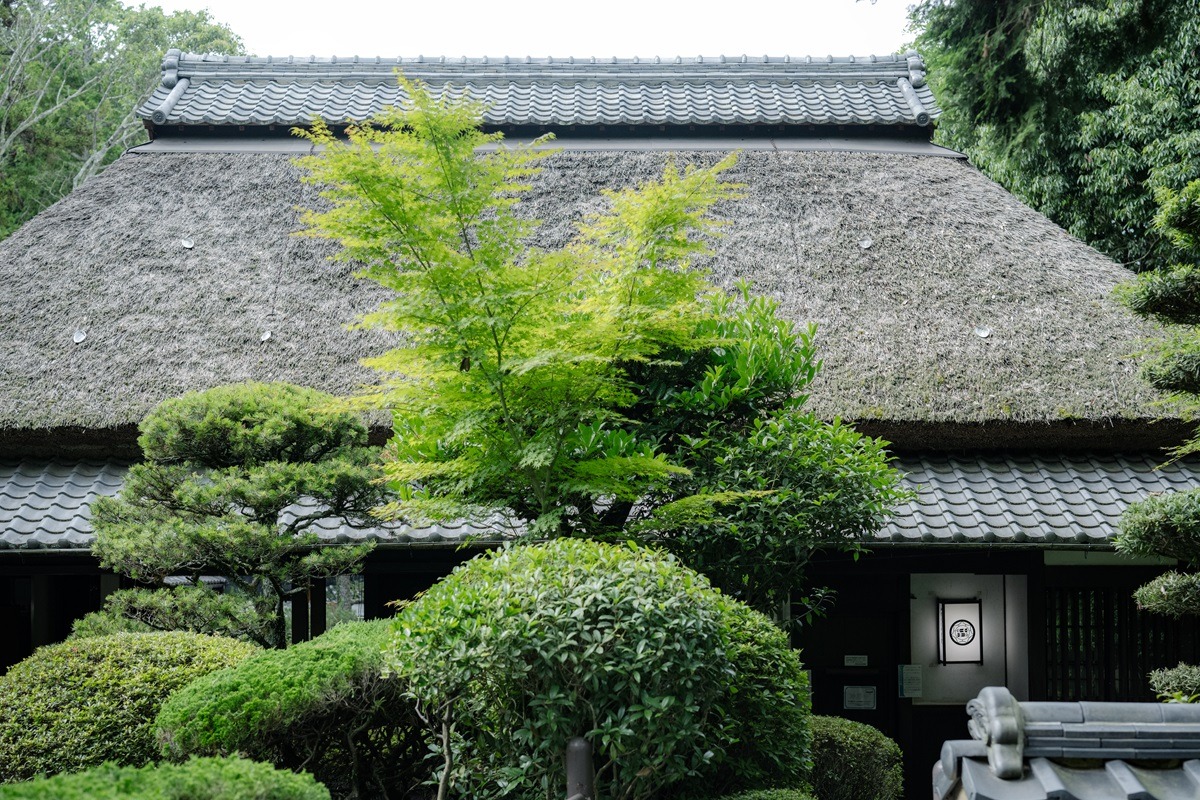
The Karakuri Ninja House, a relocated fortified residence from the late Edo period (around the 19th century). The Ninja House was not only a residence for ninjas but also served as a cutting-edge gunpowder research lab at the time. The Iga-ryu Ninja Museum houses one of the world’s largest collections of ninja-related materials, with around 1,000 artifacts. It consists of three main areas: the Karakuri Ninja House, Ninja Experience Hall, and Ninja Tradition Hall, offering a comprehensive look at ninjas and their techniques from the Sengoku period (late 15th to late 16th century) to the Edo period (1603–1868).
Disguised as a farmhouse, the Karakuri Ninja House features ingenious contraptions such as revolving doors, hidden sword stashes, and trick panels. Ninjas had secret methods for mixing gunpowder and practicing ninjutsu, and these devices were designed to protect their techniques, information, and families, as well as to ensure safe escape. At the museum, guides dressed as ninjas demonstrate and explain the purposes and ingenuity behind each device.
The revolving door, or donden gaeshi. By applying force to a visible panel on the wall, the panel rotates, allowing a person to hide in an adjacent room in an instant. Handling the door requires training to stop rotation at just the right moment. The sword stash, or katana kakushi, is a hidden spot within the floorboards for a dagger, enabling quick emergency access. In the Ninja Experience Hall, ninja tools such as shuriken (ninja stars) and mizugumo (water-walking shoes), both genuine articles and replicas based on historical ninja manuals, set out on display, while the Ninja Tradition Hall showcases the history and daily lives of ninjas. The core teaching of Iga-ryu (Iga-style) ninjutsu, “Observe closely, strike when unguarded. Do not fear, do not underestimate, do not overthink,” offers valuable lessons for modern life.
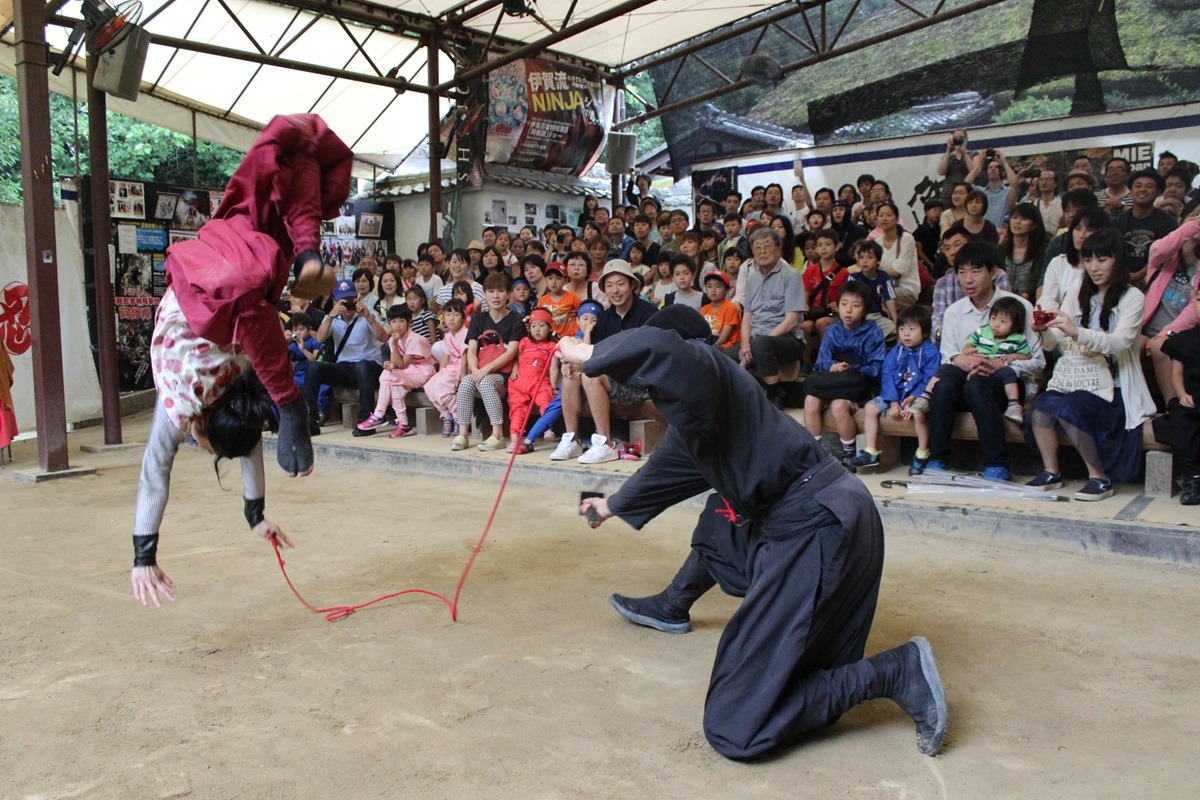
Swamps, impossible to walk or swim across, were more challenging to traverse than water. Swamp moats surrounding castles and fortresses to prevent enemy intrusion were navigated using mizugumo, or water-walking shoes, which distributed weight, enabling one to walk over the surface of water. The Ninja Show showcases the skills of Iga-ryu ninjas with real techniques, not merely theatrical performances. Don’t miss the thrilling action played out with real weapons such as shuriken, swords, and kama (sickles), the culmination of the wisdom and physical ability developed by the Iga-ryu ninjas!
Dazzling maneuvers in the Ninja Show performed by the Ashura Iga Ninja Special Forces, who also put on shows worldwide. Iga-ryu Ninja Museum
Address: 117 Ueno Marunouchi, Iga-shi, Mie-ken
Phone: 0595-23-0311
Opening Hours: 10:00–16:00 (weekdays); 10:00–16:30 (weekends/holidays)
* Last admission 30 minutes before closing
Closed: December 29 – January 1 (excluding temporary closures)
Admission: Adults 800 yen, Children 500 yen
Ninja Show: 500 yen per person (check for performance dates)
Shuriken Throwing Experience: 300 yen for 6 throws per person
Become a True Ninja at Akame 48 Waterfalls
Situated at the heart of Murou-Akame-Aoyama Quasi-National Park, Akame 48 Waterfalls is a stunning location where you can enjoy the seasonal beauty of fresh greenery and autumn leaves, all complemented by the famous waterfalls. Akame 48 Waterfalls is a series of waterfalls located upstream of the river Takigawa, straddling the border between Mie and Nara Prefectures. The name Akame originates from a legend where En no Gyoja, the founder of Shugendo, saw Fudo Myoo (the Buddhist deity of fire) appear riding a red-eyed ox while he was training here. The term “48” signifies “a large number,” and along the 3.3-kilometer hiking course there are 23 named waterfalls. The landscape has been likened to a mandala depicting Buddhas and Bodhisattvas, and visiting all the waterfalls is believed to fulfill various wishes.
Fudo Falls, named after fire deity Fudo Myoo, stands 15 meters tall and is one of the highlights among the five most famous of Akame’s waterfalls. The Akame 48 Waterfalls is also said to be a training ground for the ninja Momochi Tanba, who was active around the 1570s and is considered a founder of Iga-ryu ninjutsu, as well as his disciples, with ninja training experiences available to visitors. With a guide accompanying you, the experiences are safe and enjoyable even for children and beginners, and rental ninja costumes are available to enhance the training atmosphere.
At the foot of the Akame 48 Waterfalls lies the ninja training area. Change into you’re a ninja costume of your preferred color and start your 90-minute training journey. Learn the art of shuriken throwing, following the focus-inducing mantra, “Throw without hesitation, keep your eyes on the target, miss and you die.” Shuriken were a valuable tool at the time, so any wasteful throwing was forbidden. Cross a 15-meter rope using only your hands to master your infiltration techniques, and scale high walls in the wall-climbing training to learn ninja climbing techniques! The training includes using various ninja tools, camouflage techniques, climbing techniques, flying techniques, walking techniques, and hiding techniques, among over 20 different types of training. Your guide will craft a program tailored to the weather and number of participants. The ninja training experience, which demands concentration and balance rather than power or speed, allows you to engage deeply with both mind and body, with an addictive sense of achievement and pleasant fatigue. Successfully complete the training course and receive your very own Certificate of Mastery in Iga Akame-ryu ninjutsu!
Ninja Training Village Akame 48 Waterfalls (NPO Akame 48 Falls Valley Conservation Committee)
Address: 671-1 Nagasaka, Akame-cho, Nabari-shi, Mie-ken
Phone: 0595-41-1180
Summer Hours (Second Friday in March to November 30): 8:30–17:00
Winter Hours (December 1 to the Second Thursday in March): 9:00–16:30
Closed: December 28 – December 31 and Thursdays from December to the Second Thursday in March
Valley Conservation Fee: Adults 1,000 yen, Children (elementary and middle school) 500 yen
Ninja Training Experience
Phone: 0595-64-2695 (Ninja Forest Reception at Akame Natural History Museum)
Fees: Adults 3,500 yen, Children (elementary and middle school) 3,000 yen, Infants (under elementary school age) 2,200 yen, Ninja Costume Rental 1,000 yen
Savor the Elusive Taste of Iga’s “Phantom Beef” at Ninja House Sumibiyaki Sandayu
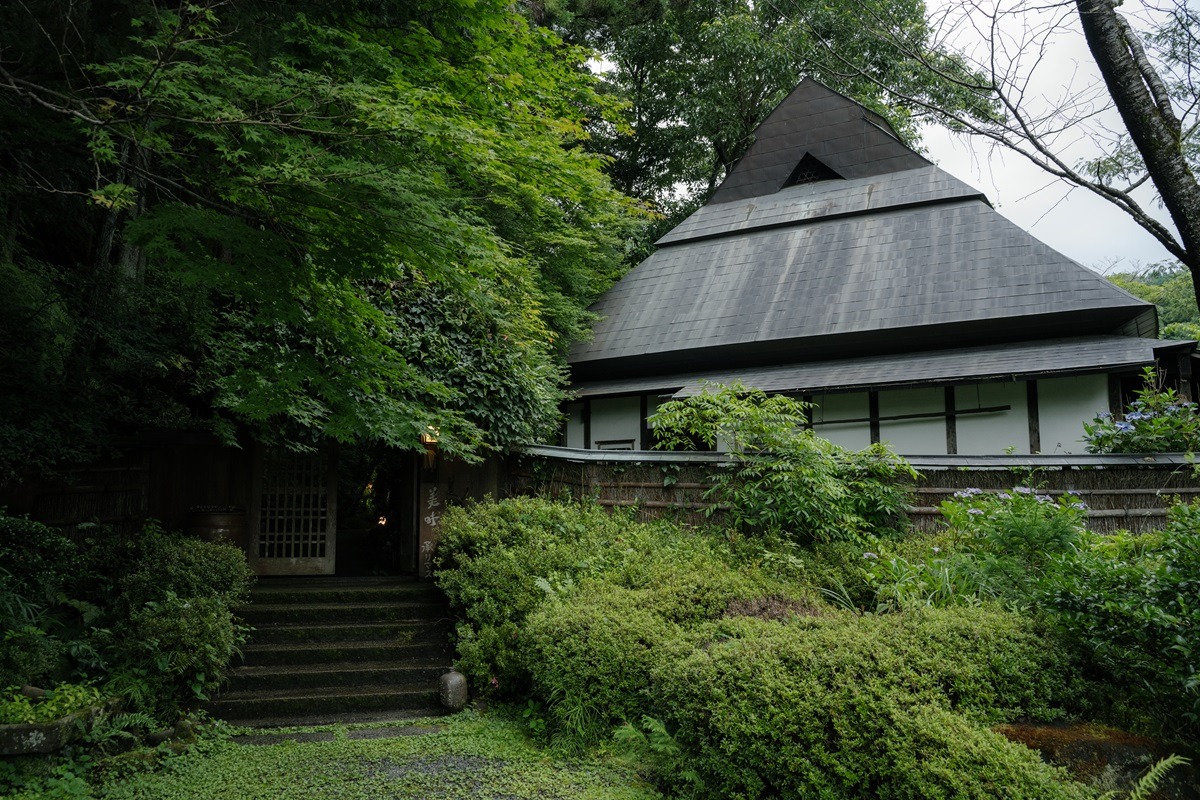
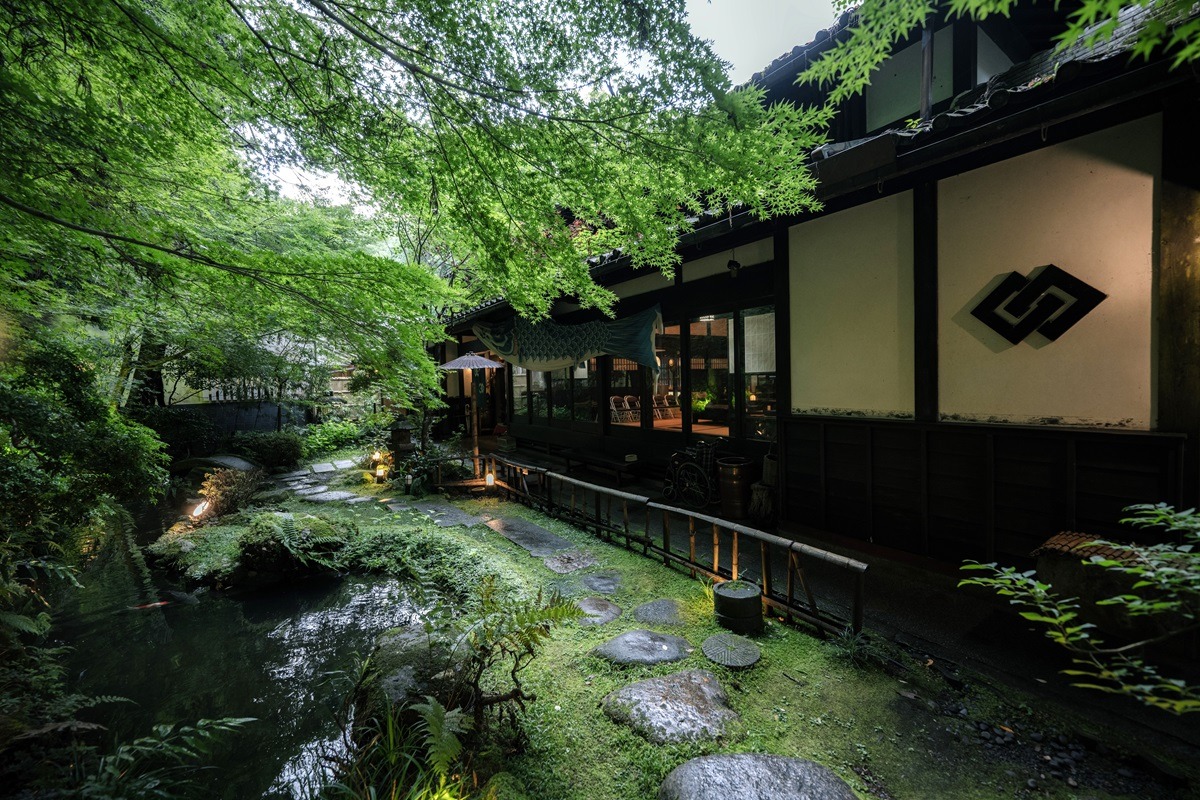
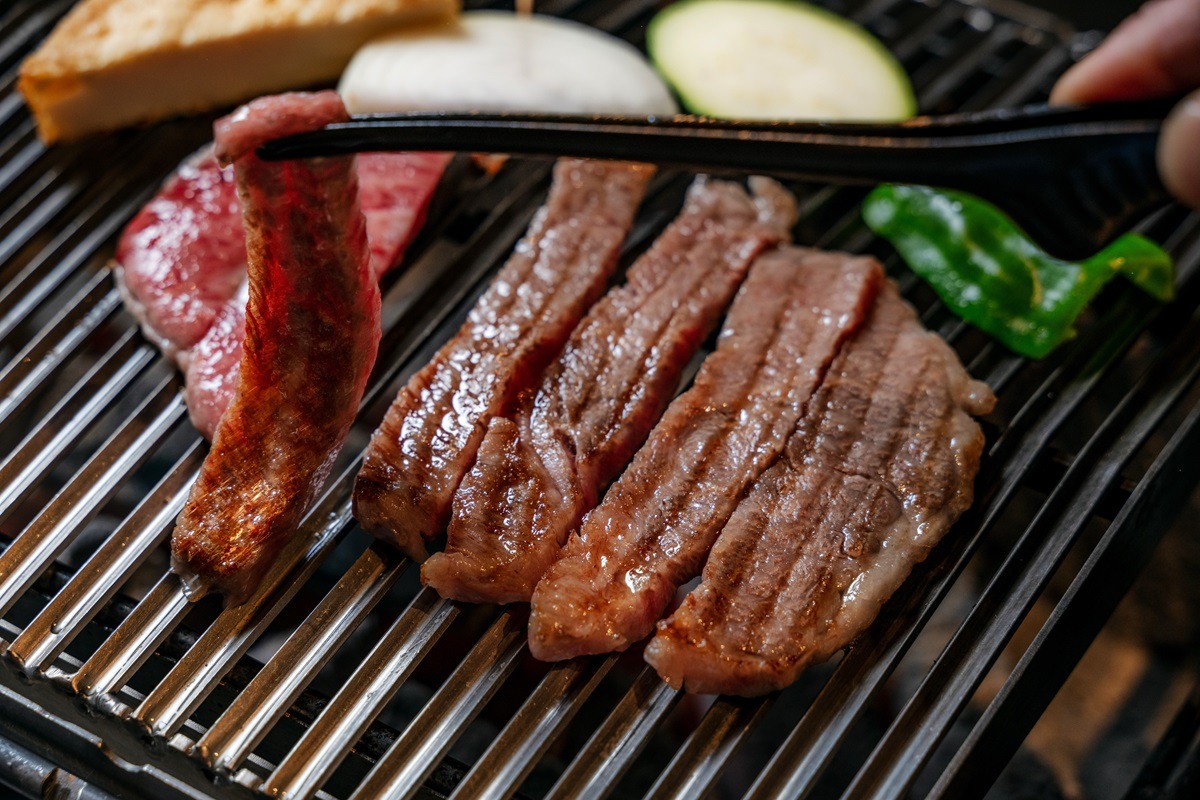
Nestled so discreetly along the roadside you might miss it were it not for the sign, Sumibiyaki Sandayu offers a unique dining experience. If you find yourself looking to try some of the gourmet delights unique to the Iga/Nabari area, head over to Sumibiyaki Sandayu, located in a secluded spot along the Uda River. This yakiniku (grilled meat) restaurant specializes in grilling Iga beef and seasonal vegetables over charcoal. The building is a reconstructed and relocated residence of Momochi Sandayu, the founder of Iga-ryu ninjutsu. Inside, you will find antique farming tools and wooden mortars, recreating the historic atmosphere and taking you back in time to Japan’s Sengoku period.
The original Momochi residence was destroyed by fire about 40 years after it was relocated. The current building is a reconstruction. While Mie Prefecture is famous for Matsusaka beef, Iga beef is just as noteworthy, having been introduced as a high-quality domestic beef in the late Kamakura period. Featured in the historical document Kuniushi Juzu (Ten Types of Domestic Beef), Iga beef is distinguished by its lower marbling compared to other brands, offering a perfect balance of lean meat flavor and fatty sweetness. Most of this rare beef is consumed locally, earning it the nickname “phantom beef.” It is said that ninjas carried sun-dried beef as portable food, which some believe to be the origin of Iga beef.
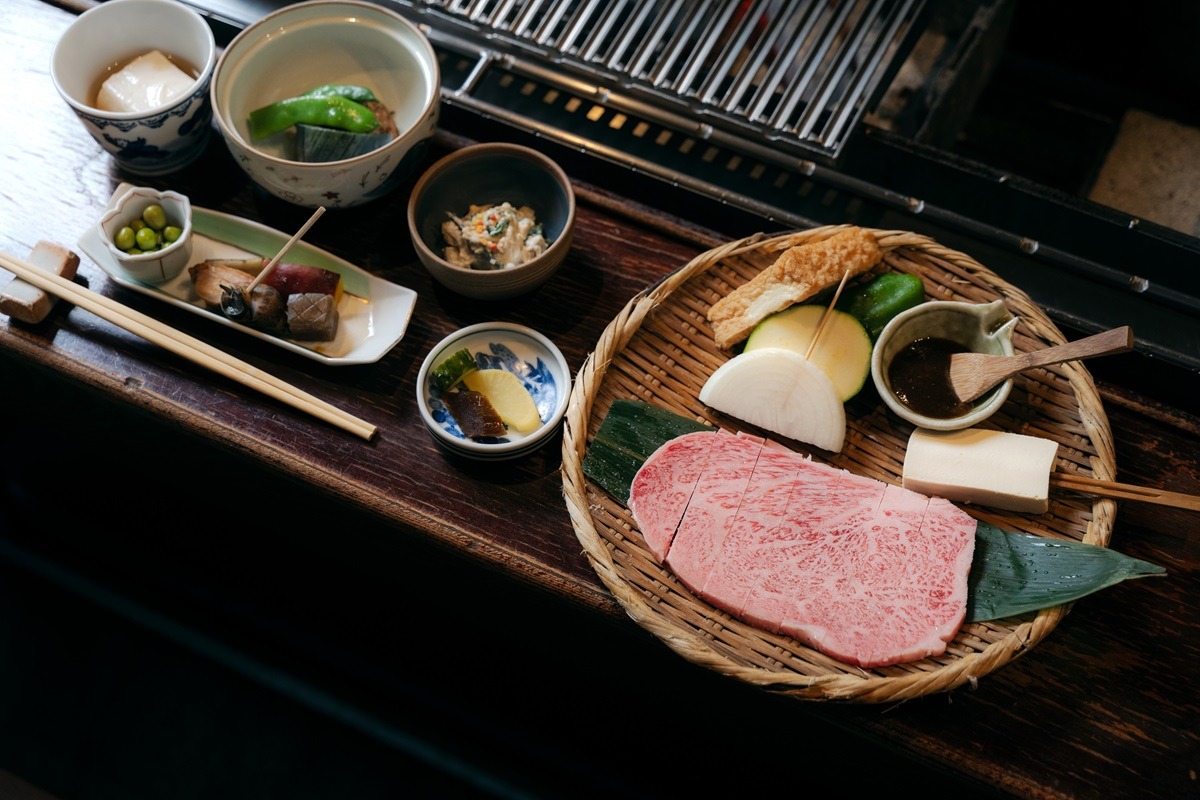
The charcoal-grilled Tsuki course (6,600 yen). The far-infrared heat from the charcoal traps the meat juices, preserving the flavor. The exquisite side dishes, featuring seasonal ingredients like shira-ae (tofu, sesame, miso salad) and simmered dishes, are also not to be missed! The restaurant’s proprietor, Moriwaki Hidenori, grew up watching his grandfather, who ran a meat shop and restaurant. After honing his culinary skills in Kyoto and Osaka, he took over Sumibiyaki Sandayu about eight years ago. Moriwaki’s expertise in selecting the best Iga beef has garnered a loyal following, with some patrons traveling from as far as Kanto to savor his dishes.
Pass through the gate, and enter into the enchanting space of Sumibiyaki Sandayu, creating a feeling just like you have been invited by a ninja to dine on the local Iga beef.
“I often get mistaken for a ninja descendant, but I’m just a chef,” laughs Moriwaki Hidenori, proprietor Sumibiyaki Sandayu. Sumibiyaki Sandayu
Address: 520 Abeta, Nabari-shi, Mie-ken
Phone: 0595-64-0055 (Reservation required, reception 11:00–15:00)
Hours: 12:00–14:30 (LO 13:00)
17:30–20:30 (LO 19:00)
Closed: Mondays
*Hours and closed days may change based on reservations.
*Cash only
Iga’s Souvenir Hero: Iga no Kyomaruya
Iga no Kyomaruya is just a six-minute walk from the Iga-ryu Ninja Museum. After a visit to the Iga-ryu Ninja Museum , why not stop by Iga no Kyomaruya, a souvenir shop themed around Iga and ninjas? The shop specializes in original fashion items such as aloha shirts and sukajan bomber jackets featuring ukiyo-e style ninja designs. The mastermind behind these unique items is shops representative Asano Masashi. Asano, who previously worked as a fashion designer in Tokyo, moved to Iga seven years ago and has been running the shop ever since.
Iga Kumihimo Aloha Shirt (short sleeve), 27,800 yen. (Prices at time of writing.) The aloha shirts at Iga no Kyomaruya have their roots in Japanese yukata and kimono. These shirts are made from fabric dyed using the traditional tenasen technique, where each color is screen-printed one by one. The illustrations are hand-drawn by Asano himself. The decorative loop for the top button features Iga kumihimo, a traditional craft from Mie Prefecture, and the buttons are made from Mie-sourced deer antlers.
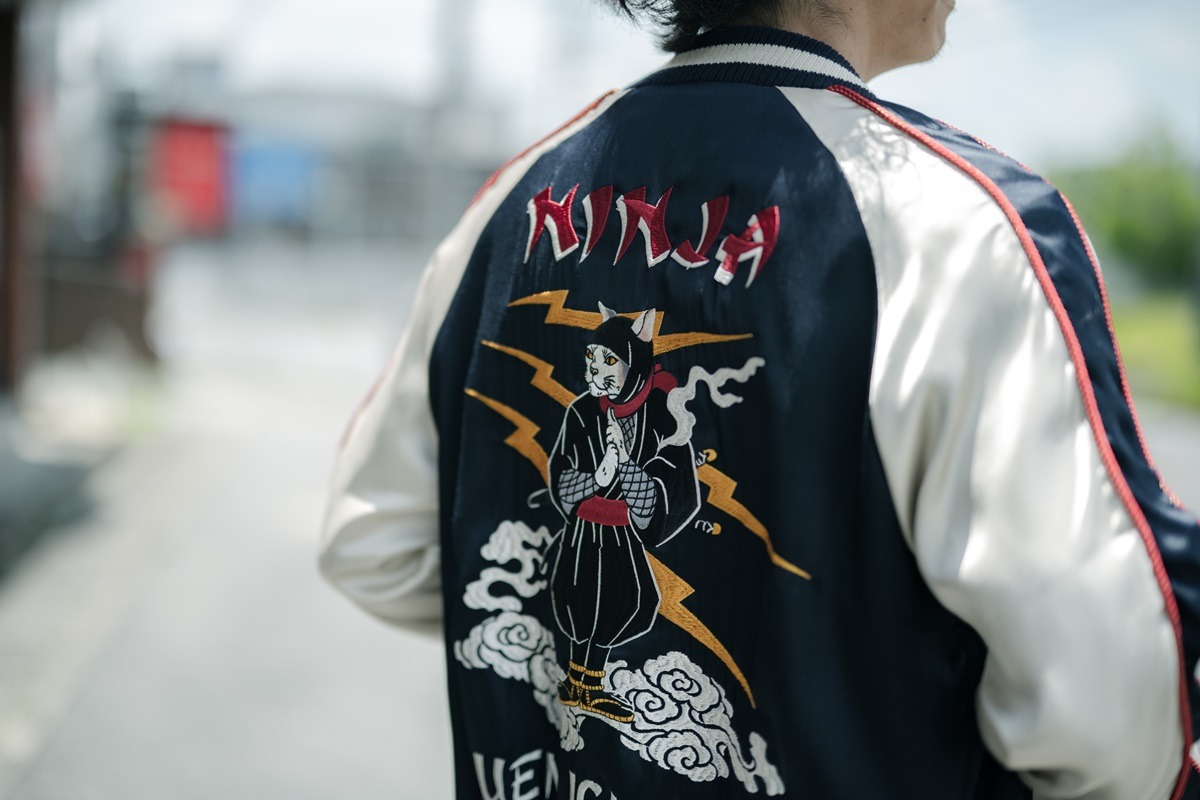
Iga Kumihimo Sukajan, starting at 54,000 yen. Sukajan, also known as souvenir jackets, originated in Yokosuka, Japan, shortly after World War II, targeting American military personnel. Made from silky rayon fabric, these jackets feature delicately embroidered original characters designed by Asano. The decorative cords on the sleeves, like those on the aloha shirts, use Iga kumihimo.
Both the aloha shirts and sukajan are exquisite pieces that blend tradition with the unique ideas of Iga no Kyomaruya.
Limited edition T-shirt featuring Alien Baltan, a space ninja from the TV show Ultraman. The ability to develop collaboration products with such characters is thanks to Asano’s experience as a designer at an apparel company. Asano Masashi, the representative of Iga no Kyomaruya, is expanding his work to include designing posters for Iga events. Asano decided to open Iga no Kyomaruya after visiting Iga. “There aren’t any souvenirs I’d want for myself,” he thought. “I want to boost Iga’s appeal with ninja-themed souvenirs!” His passion and design skills have since garnered attention, leading to the creation of numerous products with the help of various collaborators. Asano’s belief that “tradition survives when it’s in use” is embodied in each item, making them the ultimate souvenirs from Iga.
Iga no Kyomaruya
Address: 126-1 Ueno Marunouchi, Iga-shi, Mie-ken
Phone: 0595-51-6138
Hours: 11:00–16:00
Closed: Mondays, Tuesdays, and other days
*Business hours may change. Please check Instagram for details.
Access to Mie Prefecture
Mie Prefecture is conveniently accessible by JR (Japan Railways) and Kintetsu trains from Osaka, Kyoto, and Nagoya.
The Iga region, featured in this article, can be reached by both JR and Kintetsu, while the Nabari area is accessible only by Kintetsu. Additionally, there is a Mie Kotsu express bus service from Nagoya (Meitetsu Bus Center) to Iga (Uenoshi Station), which includes the Iga Ninja Liner Ticket offering an entry ticket to the Iga-ryu Ninja Museum and a shuriken experience.
When traveling to Mie Prefecture by JR, the JR Pass is highly convenient.
For those who wish to explore other areas mentioned in this special feature, such as the Kumano Kodo or Wakayama, the JR Tourist Pass is recommended.
Kintetsu offers direct and fast access to Mie from Osaka, Kyoto, and Nagoya without the need for transfers. The KINTETSU RAIL PASS 5 Day / 5 Day Plus provides unlimited travel on all Kintetsu lines, including Iga Railway, for five days.
Iga Ninja Liner Ticket
Round-trip ticket: 4,600 yen One-way ticket: 3,000 yen
Tickets sold at the Mie Kotsu ticket office on the 3rd floor of Meitetsu Bus Center or at the Central Japan Travel Center on the 2nd floor of Chubu Centrair International Airport.